My Breast Perspective

My story about preventive mastectomy w/ reconstruction.

  • Car pillows, wedge pillows, chest pillows, body pillows, heart pillows… I love them all.

    When I was researching items that would be helpful with recovery, I came across a lot of different suggestions for different types of pillows. Honestly, I would recommend every single one of them.

    Car pillows. They make pillows that attached to your seatbelt that make driving more comfortable. I used it when driving home from the hospital and continue to use it even now as I’ve had a few weeks to recover. I found a set that not only included a seatbelt pillow, but also included a pillow to go around my waist/chest, which was surprisingly comfortable to rest my arms on. I think it will be helpful again when I have the second procedure. Bonus, it had a pocket that could hold my cell phone or snack or remote control, and still access while on T-Rex arm protocol.

    Wedge pillows. Sleeping propped up with a wedge pillow in bed and a wedge pillow under my knees was helpful. The surgeon suggested doing this at least for the first week to help with swelling. I felt like this was pretty comfortable, but I liked sleeping in a chair better than in bed, so I didn’t use these pillows as much as I had anticipated.

    Mastectomy pillow. I used the car pillow that wrapped around my waist as my chest pillow. It was just nice to have wrapped around me. I also used it when I would walk into my house and want protection from dogs jumping or big hugs.

    Body pillows. These came with my wedge pillows as a set. It’s how I created my nest in bed to keep me from rolling onto my side. I actually loved the body pillows and used them when I was sleeping on the couch or in a chair. Since I couldn’t lift my arms, these would tuck in beside me, and I could lean my head on them, and it felt secure and comforting.

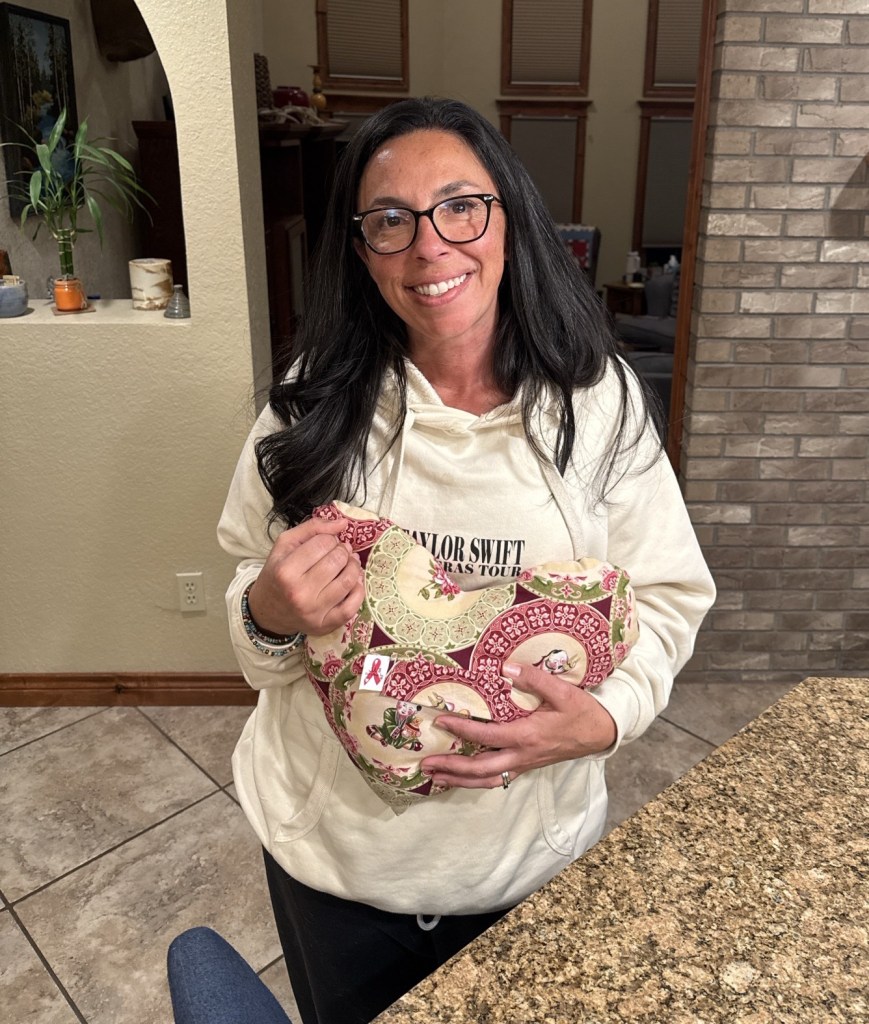
    Heart pillow. I was given a heart pillow that was made by a charity. The nurse at the hospital gave it to me when I was discharged to go home. I was so grateful that somebody was thoughtful enough to make it as a gift. It was also an incredibly useful design as it can tuck under your arm, or around your neck, but what I found I enjoyed it for most was to hold when I slept cause it propped my arms just perfectly.

    Other than pillows, here are a few other items I found very useful. (I have no affiliation with any of these products)

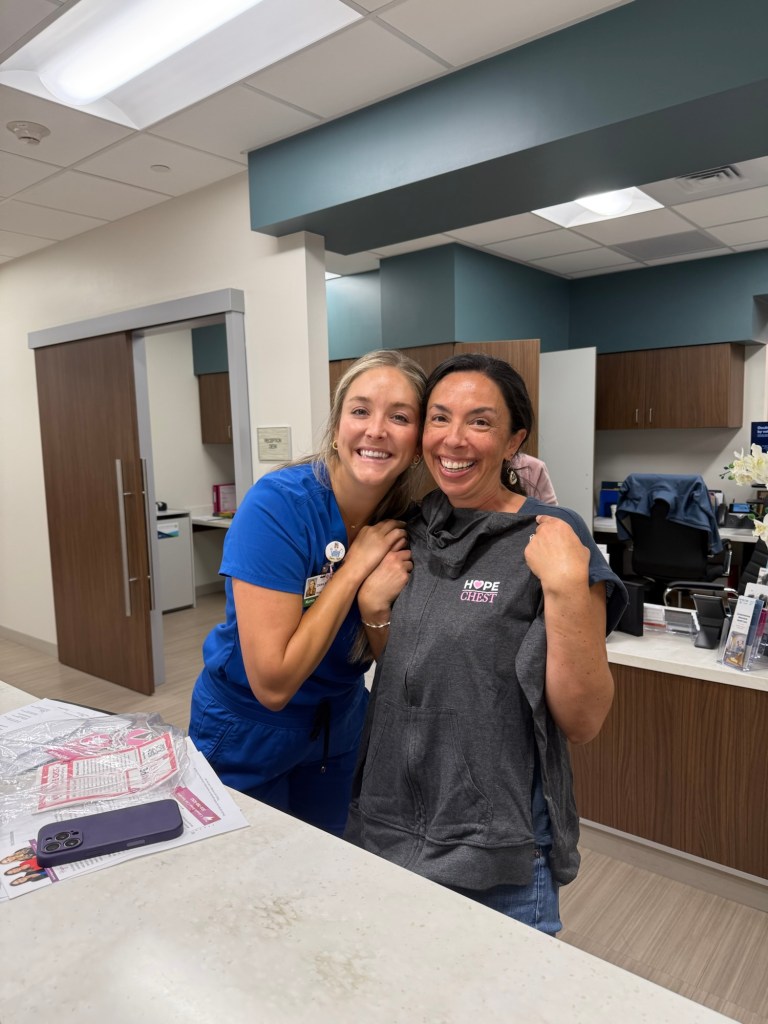
    Zip up sweatshirt with internal pockets. My Surgeon gave me one that was donated by HopeChestCharity and it was great because it was easy to get on and helped with managing drains.

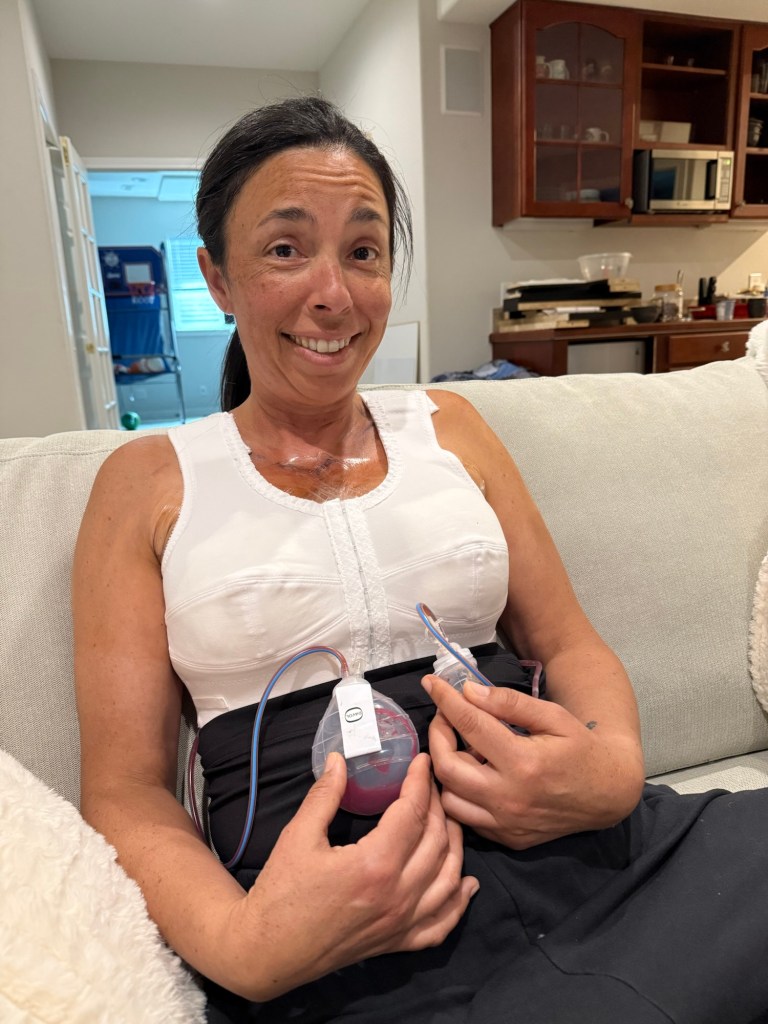
    Waistband with pockets for drains. I bought this Waistband and loved the feel of it. It was like wearing leggings around my waist, which was actually really comfortable. It also made the experience of having drains less noticeable as everything tucked in including the tubing. I basically wore this 24/7 for two weeks as it was very comfortable to sleep in.

    Book light. Basically, the first month you’re not supposed to reach out to the side or behind your body, which makes it hard to turn off a bedside lamp. Also, I like to read before I sleep, so it was nice to have my own book light that I could turn off when I was finished reading. A little bit of independence.

    Button-up shirts and pajamas. Button or zip front shirts are a must for the first month if not more as it will be a challenge to get your mobility back enough to put a shirt on over your head.

    Comfortable sports bra. I bought two of these Bras from Victorias Secret because they were comfortable, had a soft-breathable material and nice compression to minimize swelling. Find something you love as you will wear this around the clock for many weeks. My instructions are to wear this even when I sleep for the first eight weeks.

    I suppose my breast perspective during recovery would be to gather items that make you the most comfortable. The medical care teams will share tips and give suggestions along the way. Feel free to reach out to the charities listed too.

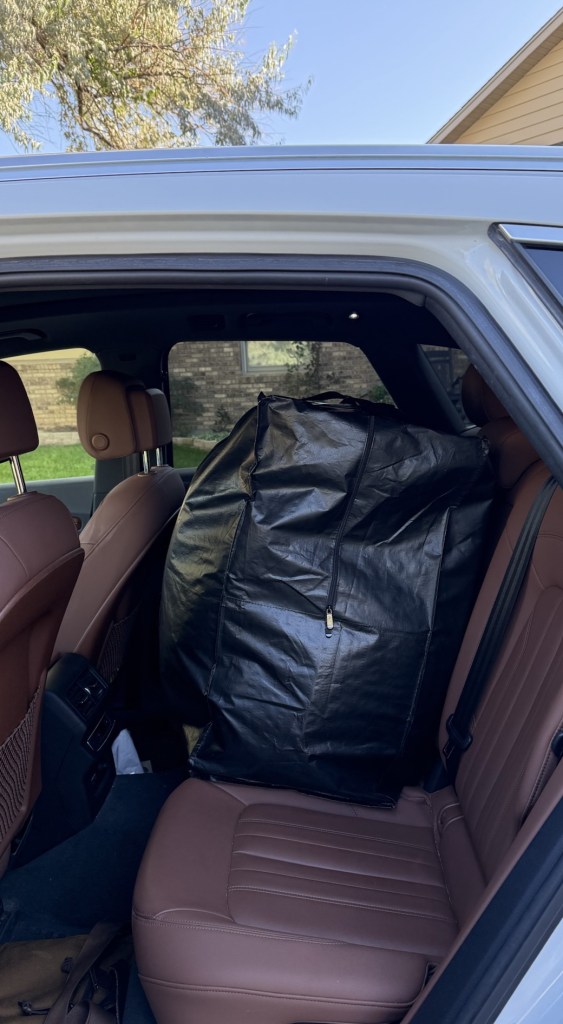
    Driving back to Wyoming with my car pillows.
    Waistband for holding drains.
    Tucked in for the night.
    Bag-o-pillows!
    Heart pillow from hospital.
  • The first week after the surgery went smoothly. I was given a nerve block which helped with the pain and I alternated taking ibuprofen and Tylenol. I never needed any of the prescribed narcotics. My days included watching tv – bonus that I got to watch New Heights featuring Taylor Swift the day after my surgery. It took my mind off of my body and was a fun time. I alternated tv, writing, reading, napping and walking. At first walking just included inside the house. Each day I got more energy and started walking outside a little. The sunshine was nice. I’m sure I looked funny in full sweat pants and a zip up hoody in 90 degree weather, but I didn’t care.

    I had two drains that had to be emptied and documented twice a day. Before surgery I thought I would take care of them, but after the first time watching my husband strip the tubing and empty the “bulb” I almost passed out. Honestly, for the next five days I kept my eyes closed while Ryan managed the drains.

    Sleeping at night was the hardest part for me. Doctor’s orders are to sleep on your back, elevated for the first six weeks. I’m typically a side sleeper which made this feel like an almost impossible task. At first I tried using a wedge pillow behind my back and under my knees, with two body pillows on either side of me. My pillow palace was enormous – I’m not really sure how Ryan had room in the bed, but we made it work…at least for a few hours. I needed help those first few days every time I moved positions which meant that I was tucked in to start the night and had to ask for help (aka wake Ryan up) every time I needed to get up. When I would sit up after sleeping, my chest ached and it took a few minutes before I would stand up to move around.

    Side note: I never felt soreness at the incisions or on the outside of my breasts…all of my tenderness or tingling was on my internal chest wall.

    After trying to sleep in the bed a few times, I quickly discovered that sleeping propped up on the couch was the best place for me to sleep.

    The first week was tough, but honestly I can’t imagine how difficult it must be to go through this surgery with a cancer diagnosis and going through chemo or radiation therapy while trying to recover. I kept this perspective with me each day as I recovered. It helped get through the difficult nights.

    A friend sent a sweet package that included this cozy blanket that I used daily.
    Walking outside in 90 degrees.
    Drains and surgical bra.
  • My surgery was scheduled for 8:15 AM, so I was asked to arrive at 5:30 AM. Ryan and I got up at four so we could shower and get the bed ready with all of my pillows (they could have their own post! :)) for when I came home later that day. We drove through the quiet city in the dark, and everything felt really calm.

    I often say I live a charmed life, and today was no exception. We encountered so many kind people as we checked in to the outpatient surgery center. As we sat in the waiting room with a few other patients, a woman walked in and introduced herself as Kathy, the nurse liaison. She proceeded to welcome all of us to the surgery center and introduced herself to each of us individually. She would be in touch with our loved ones to give them updates throughout the day. My nerves were calmed by her kindness and general presence. It was a good start.

    Soon I was called back by a nurse to start getting ready for my procedure. It took about two hours to get through meeting each of the doctors and nurses that would be taking care of me. Dr. G showed up to give me a hug and confirm the procedure. Dr. Lo walked me through the plan again and proceeded to draw all over my chest (think sharpies in various colors) to prepare for surgery.

    Side note: It’s been an interesting and humbling experience for me to know that I am changing my body on purpose. A sort of letting go of a part of who I’ve been and embracing a new part of what I will be. I felt nervous yet calm – resolved, and still grateful for the opportunity and for the team of people who would be taking care of me. I am constantly in awe of people in medicine. They are smart and brave and have the ability to change our lives. They often help us in our most vulnerable moments and care for us in the most intimate of ways. We trust them with our lives and I’m grateful for their hard work and dedication.

    Sappy side note: My husband is with me through everything, truly my partner through it all. It’s a bonus that he is a physician himself and understands all the medical processes better than I do. He has held my hand on this journey and repeatedly explained everything anytime I have questions – and I have a ton of questions all-the-time. His patience truly is remarkable. But with that in mind – he is still just a big kid… He enjoyed joking that Dr. Lo’s sharpie drawing looked like a corset… always finding a way to lighten the situation!

    Around 830 I was wheeled into the operating room, said hello to all of the people who would be caring for me and quickly fell asleep.

    I awoke in the recovery room around 1 PM. I felt a heaviness on my chest and immediately thought how happy I was to not have to worry about Breast cancer. I guess I didn’t realize how much that had weighed on me. My second thought was, I hope my new boobs look ok.

    Luckily, I was given a nerve block so other than a sensation of heaviness I did not have much pain. I was released to Ryan who drove me back to our families’ house. I struggle to come out of anesthesia easily so that day included a lot of throwing up. Yuk.

    Huge shout out to my sister-in-law, Meagan and my husband. They both helped me stay comfortable during my recovery. Between feeding me, dressing me, emptying my drains, keeping up with my meds and helping me stay comfortable they worked their asses off while I slept and relaxed/recovered those first few days.

    I had to sign a waiver that I had someone to take care of me upon my return home. Although this procedure is outpatient, I’ll need help for the next six weeks to do daily tasks. This is stuck in my mind as I’m recovering, it puts my experience in perspective. I’m incredibly grateful that I have a village who cares for me and that I was able to choose to do this electively while I am healthy.

    Surgery day – waiting room
    Wrapped and ready for procedure
    Recovery room
  • My Team / Pre-op

    I went to my pre-op appointments with the physical therapists, the mastectomy surgery team and the plastic surgeon. It was an amazing experience to visit with each group and realize how incredible it is to have such a great medical team taking care of me.

    Each of them walked me through how to prepare for surgery and what to expect during recovery.

    The physical therapist explained what each week would look like post surgery. She also measured the strength and mobility of my arms. The stretching was really nice and a reminder of what my goals will be post surgery to get back to. I won’t actually meet with them again until three weeks after the surgery. They said for the first three weeks to walk, make sure I’m not hunching over and only use my arms from the elbows down, like a T-Rex.

    The surgery team that is doing my mastectomy is the Colorado Breast Care Specialist group at Rose Medical Center. Each person on their team is kind and caring and has made the process so simple for me. They work with women who have been affected by breast cancer and also have a preventive health program for women with strong family histories. I would highly recommend this group if you’re in the Denver area or even if you’re traveling from afar – like the middle of Wyoming where I live. I’m hopeful there are other programs like this throughout the US. Dr. Griffith is the surgeon – she is thorough, honest and kind and gives great hugs to make you feel safe in her care. Dana is a PA who is part of the care team. She had a fun and kind way of walking me through the surgery process. A simplification of her explanation is that Dr. G removes all of the breast tissues, hence removing 99% of the areas a woman can get breast cancer. I will check in with them two weeks after surgery and then in six months.

    Dr. Lo is my plastic surgeon and she is fantastic. She works in tandem with Dr. Griffith during the surgery. Their team approach to this procedure is remarkable. The goal is to not have multiple surgeries, so they work side-by-side during a four hour procedure. It is an outpatient operation…truly remarkable. Dr. Lo works to preserve the nipple and all the vessels and nerves she can, while also giving a reconstruction and lift. We discussed size goals and types of implants. She uses a variety of different implants, including the Motiva. I’m excited about the Motiva implant because of the new technology of silicone it has. However, because it is newly approved in the US, and not available quite yet at this hospital, I will have an implant swap later this year.

    Something I didn’t know about the mastectomy with reconstruction is that since they remove all the breast tissues, there is no “cushioning” left, so often you can see the implant shape under the skin. A second procedure is typically necessary to add fat tissue back in and smooth everything out in an attempt to make it look more natural. Hoping that healing goes well and that I can squeeze it in during the deductible year.

    Another part of my medical team that has been super supportive throughout this process is my local family medicine doctor, Dr. Strandberg. She and her team have helped with prior-auths and discussions about being healthy going into surgery. She’s been supportive throughout and I know I’ll be in good hands as I return home during recovery.

    An important piece – but also a tangent – I’d like to share a few items that were suggested to me and that I researched online to help with the healing process.

    • a wedge pillow for sleeping on your back

    • a seatbelt pillow for car rides

    • zip up sweatshirt with internal pockets to hold the drains

    • button up shirts

    • loose pants that are easy to pull up and down

    • ph-balanced wipes for the weeks you can’t shower

    I also found a cozy fabric band with pockets for drains that I think will be nice to use. I’ll have to let you know after I’ve had the procedure if it was helpful.

    I know I said it earlier, but it’s worth repeating. Find yourself a team. Early detection and prevention is so helpful and important when you have a family history. There are amazing people out there who want to help you navigate your process and live a quality life. That’s my best perspective.

    Dana giving me a sweatshirt with drain pockets at my pre-op appointment.
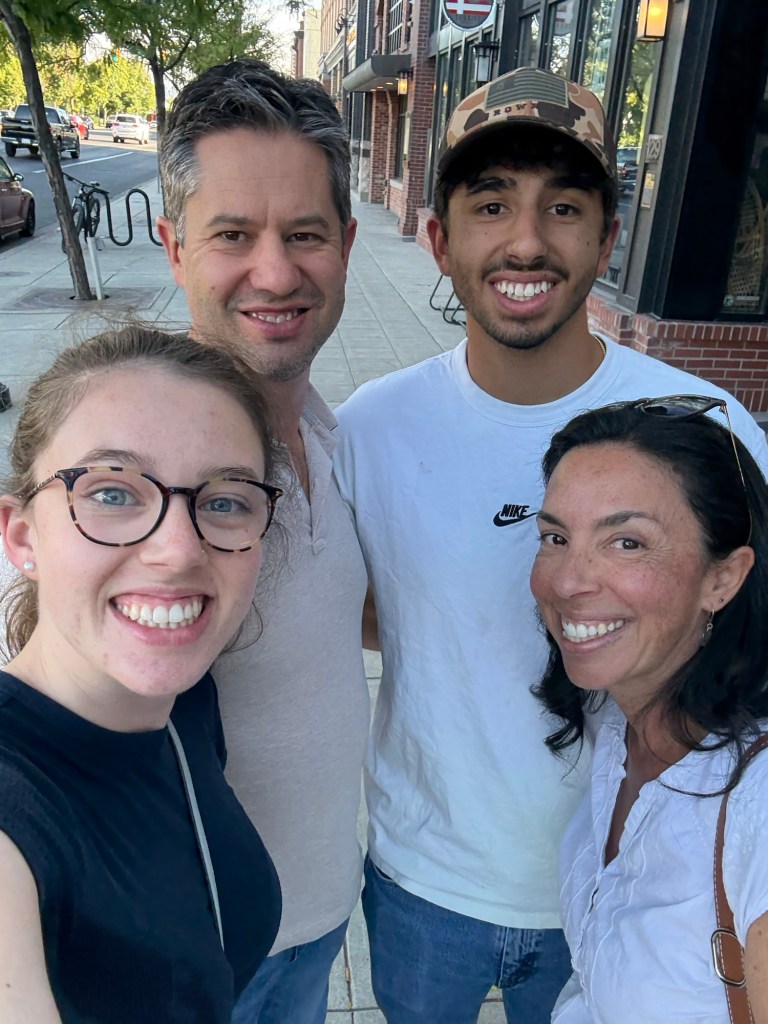
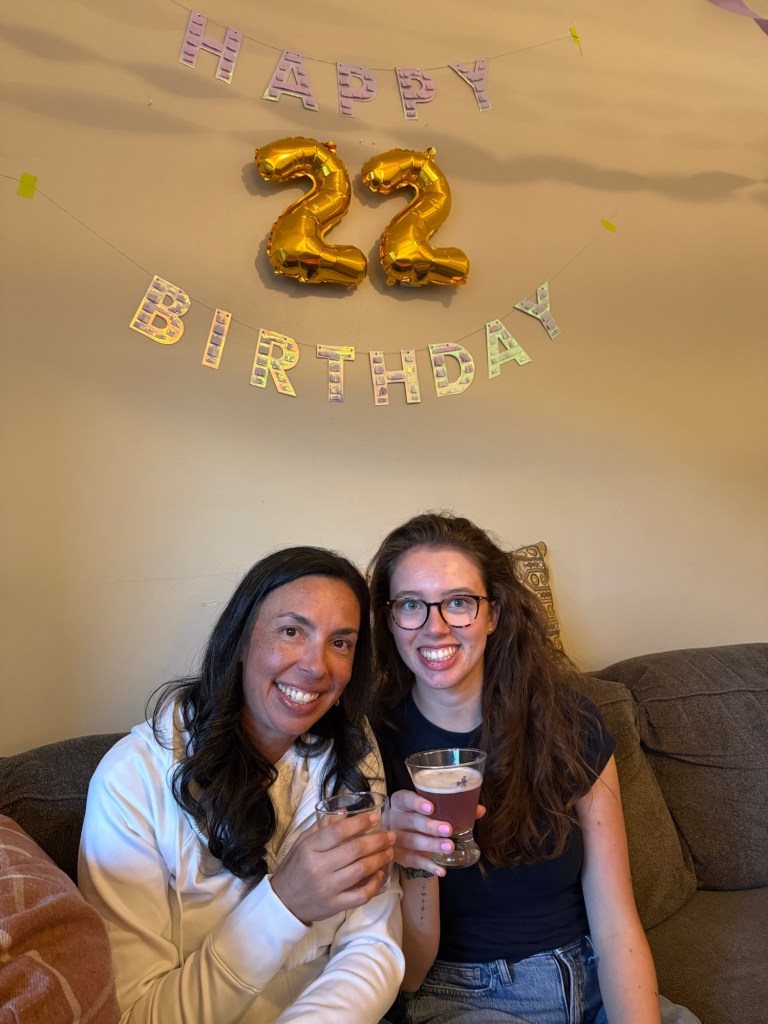
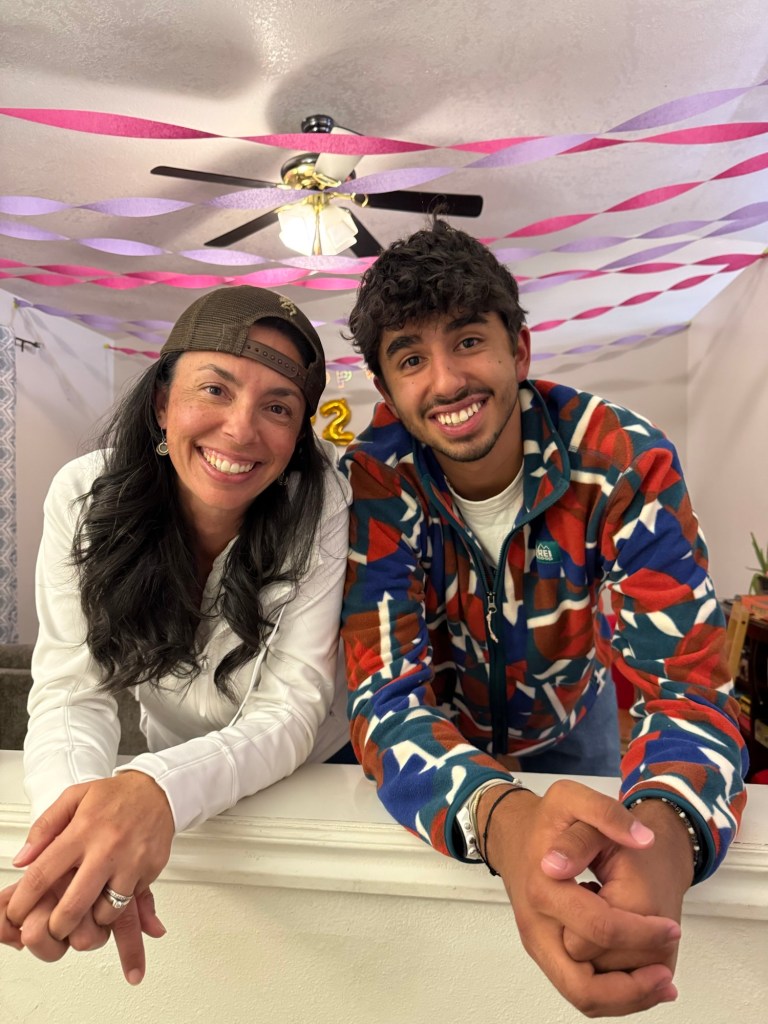
  • I spent the weekend celebrating my daughter’s birthday and moving my son back to college. It was such a fun time!

    I feel lucky to have kids that I adore and who have grown into amazing adults.

    I wrote about my early life experiences that influenced my decision to focus on prevention. But my true reason for choosing to have a prophylactic mastectomy is my family.

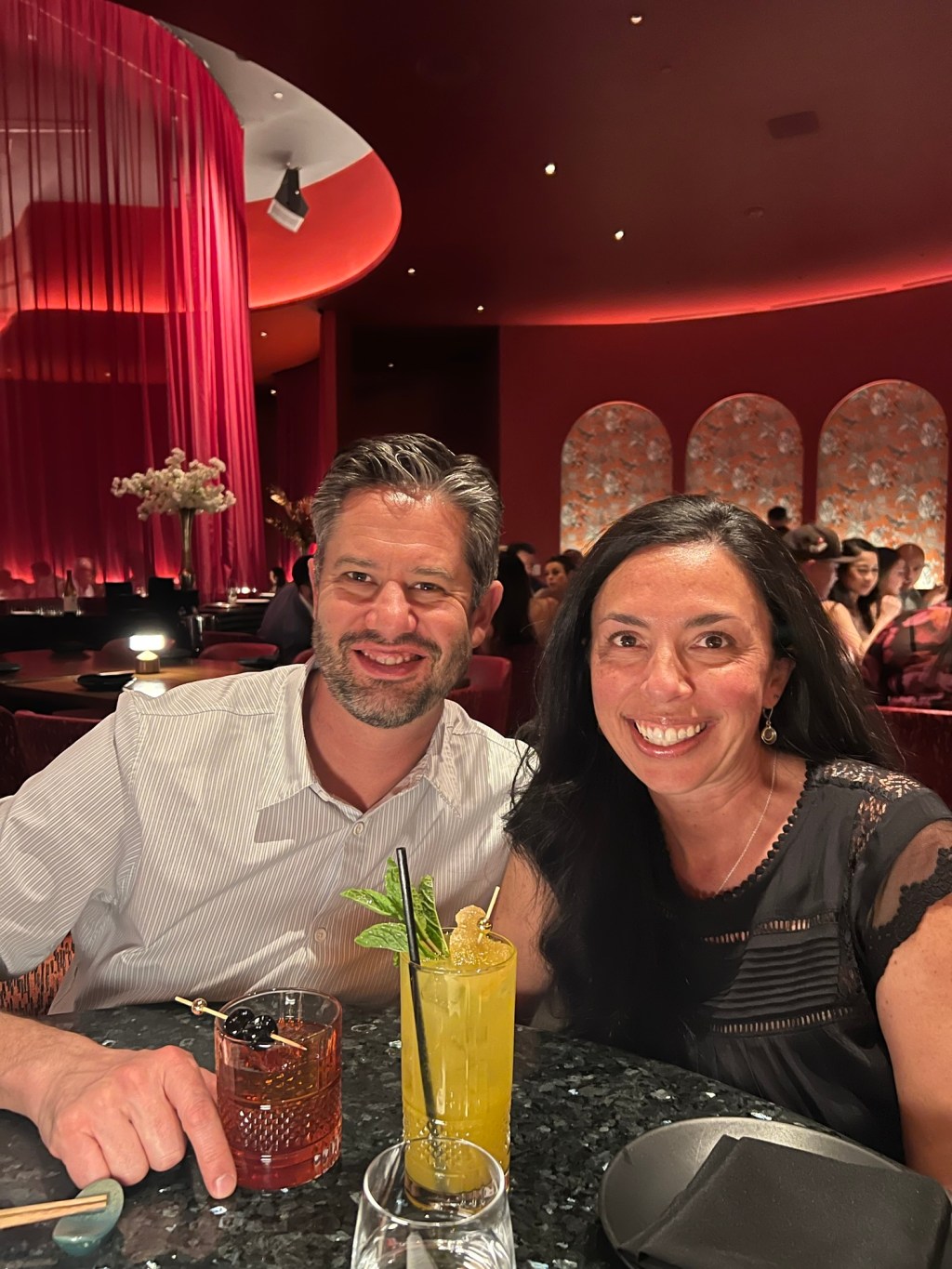
    My husband and kids are the best parts of my life.

    I want to protect them from ever experiencing anything similar to my experience with my mom. I want to work hard to live life to the fullest, be present, make brave choices, allow myself to be vulnerable and love unconditionally.

    Each of them inspires me to be the best person I can be.

    I love you Ryan, Sierra and Owen. Thank you for supporting me.

  • Gratitude

    Every experience, every person in my life has shaped me into the person I am today. I was lucky enough to meet my husband when I was 23  and learn this lesson from him. It’s taken me a very long time to believe it in my heart, which is why I’m just now writing this blog and feeling strong enough to put this out into the universe to share with you.

    This isn’t an easy concept as there are so many moments in life that are easy to regret. But once I recognized the importance of loving myself even through the most difficult times and finding the meaning in those moments, I started to find peace and learned how to prioritize gratitude.  

    Obviously that’s not to say that looking back I’m grateful that my mom got sick and passed away when I was only 15. But through that very difficult time I did learn a lot about perseverance and navigating my own path.  I am grateful for the time I had with her and the foundation she and my dad gave me up to that point in my life.

    I’m truly grateful for the people in my life that have supported me along the way. 

    I’m grateful for my family and friends who help me stay in the moment and recognize the day-to-day joy of living.

    I’m grateful I haven’t had cancer and that I have the opportunity to prevent it!

    I’m grateful I found a healthcare team that I trust, who are supportive, and kind, and holding my hand throughout the process.

    I’m grateful for all the experiences that have shaped me into who I am today.

    I’m grateful my husband is the most loving and supportive person I know.

    I’m grateful my kids love me and get me and understand the importance of my choices.

    I’m grateful I get to make this choice to fight for the opportunity to continue to live my version of a quality life.

    I’m hopeful that my story will shine light on the menu of options people have to fight breast cancer.

    And yes if you’re wondering… I will be looking back at this during the challenging time of recovery to remind myself of My Why.

  • My Family History

    I still remember the day when I came home from school and my parents told me that my mom had breast cancer, I was 12.  My mom was only 32. She was a beautiful, strong, petite hispanic woman who both inspired and intimidated me. She was honest, kind and loving. Her relationship with my dad was genuine and they were unconditionally in love. I’m forever grateful to have had them as models for parents and a loving adult relationship.

    After my mom’s diagnosis, she had a mastectomy that left an enormous scar across her chest. She battled with lymph healing and prosthetic discomfort for the rest of her short life. After her mastectomy, chemotherapy and radiation were suggested, but she ultimately chose not to pursue either intervention because of the possible consequences. Remember I mentioned she was hispanic, I believe this played a major role in her health journey. At the time of her diagnosis, for her, healthcare was hard to navigate, scary, expensive, not understood and not prioritized unless in crisis. I believe that because of her background, and the advanced stage of her cancer diagnosis, she chose a less aggressive approach. She prioritized physical therapy and healthy eating for healing.

    My mom worked hard to shield everyone from her struggle with breast cancer, until she couldn’t hide it anymore. Her life progressed over the course of 3 1/2 years where I watched her deteriorate as the cancer grew inside of her. She became blind and weak with fragile bones. I vividly remember the day that a simple sneeze resulted in a broken femur and ultimately led to the end of her life. She passed away in our home in August of 1991.

    From the ages of 12 – 15 I did my best to enjoy school, friends and sports. I babysat during the summer months; loved volleyball, swimming, music and drawing. I learned to drive and started high school. Throughout this time, I also helped take care of my mom. It felt like I was living a double life, one in which I was having fun, the other I was watching my mom die a slow tragic death.

    I’ve seen what breast cancer can do to a body when it takes over. It is a horrible thing to witness. It left an enormous scar on my heart and changed my family dynamic and life path forever.

    For a while after her passing, I slept a lot and skipped a lot of school. Luckily, I had an amazing high school counselor that suggested I get my GED and move on to college. I moved out of my house as a 17 year old and started working towards university. During this time, I struggled to find community as I was the only person I knew who had lost their mother at a young age. It wasn’t until I started to think outside the box that I began to discover a sense of community in different places. I found a book called “Motherless Daughters”, participated in Susan G Komen Race for the Cure events and volunteered at the American Cancer Society. The experience that had the greatest impact on me was volunteering for Camp Wapiyapi, an amazing camp for kids battling cancer and their siblings. I would go on to run the entire organization and did so for 10 years. I also met my husband while volunteering with the Camp Wapiyapi, which gave me an deeper sense of purpose. All of these experiences started to shift my perspective and helped me notice the beauty in life again.

    I started to prioritize quality of life. I found purpose and hope when I had community. I discovered that I could chose how to learn and grow from my experiences. I realized that living a full and beautiful life is truly all about perspective.

    Take what you will from my story and experiences. I hope that it will help you find your own Breast Perspective.

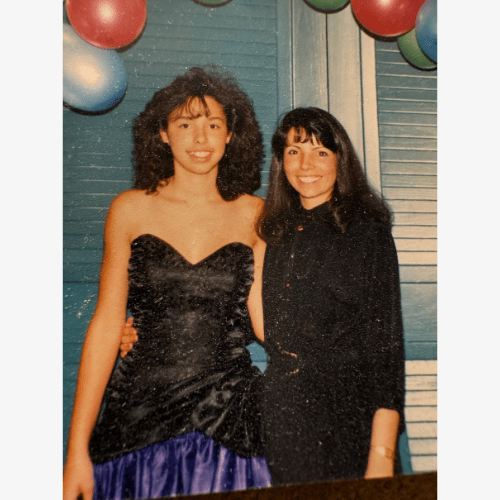
    My mom and I at a middle school formal in 1989.
  • Prophylactic Mastectomy

    Prophylactic (preventative) mastectomy was first suggested to me when I was 30. Even though I tested negative for the known breast cancer genes, my family history and dense breast tissue made my risk score very high.  At the time, my doctors suggested continual monitoring with yearly mammography and monthly breast exams. But, they explained that as I aged my risk would continue to increase and that more interventions may be needed. Eventually my risk would be high enough that even insurance would support (pay for) preventative options like mastectomy. It was less of a question of if I would get breast cancer – more of when.

    At that stage in my life I had just had our second child and was in the enjoyable (yet exhausting!) phase of young motherhood, so I tucked these thoughts away in the back of my mind.

    When I turned 40 my doctor added breast MRI’s to my yearly mammogram routine – alternating each screening every 6 months. I creatively worked the breast MRIs into the schedule when I had met my deductible because they are so expensive.  Also, I live in the middle of Wyoming, so each time I have a breast MRI I have to travel 3 hours each way.  To see my oncology specialist was a 5 1/2 hours trip to Denver every year to review my screenings. Fitting these appointments in between family time, school and work schedules, friends or just about anything wasn’t easy – but I made it a priority. 

    Now, I’m not typically the type to get flustered by medical interventions, as I work in the healthcare field. However, every time I would have a screening appointment I was reminded of my mom’s battle with breast cancer and her early death. Each time I get screened it reminds me that life is precious and prioritizing quality of life is my goal.  I try to stay grounded in recognizing the value of living each moment to the fullest, which has been a key factor of success in my life journey.  I call it My Breast Perspective

    I like being proactive instead of reactive and having this perspective has helped me to prioritize preventive health as a means of living a quality life. 

    When I turned 49, I started thinking about the next step in my breast health journey because my age had increased my risk score to the point where I needed to be more proactive. I made appointments with my breast oncologist (who I’ve gone to for preventative screenings since I was 19 – that’s 30 years!!), and he went through my preventative health options:  (1) continue aggressive screening (mammograms and MRI’s yearly) with the goal of catching cancer early to start treatments and increase my survival odds, (2) start tamoxifen (a hormone blocking agent with lots of side effects) for a possible 50% risk reduction, or (3) have a prophylactic mastectomy which would decrease my breast cancer risk to less that 1% .  

    Since you’re here, you know I made the decision to have a preventive mastectomy with reconstruction.  My recent mammogram and breast MRI were clear so the time was right for me to pursue this option.  As a side note, timing is a whole other topic because I don’t know if there’s ever a good time to add in a surgery.  

    My surgery is scheduled for mid August and honestly, I’m f#!king nervous but incredibly grateful for the opportunity to take action and decrease my odds of getting breast cancer.

    From my breast perspective, this is the right choice for me.

  • Hello!

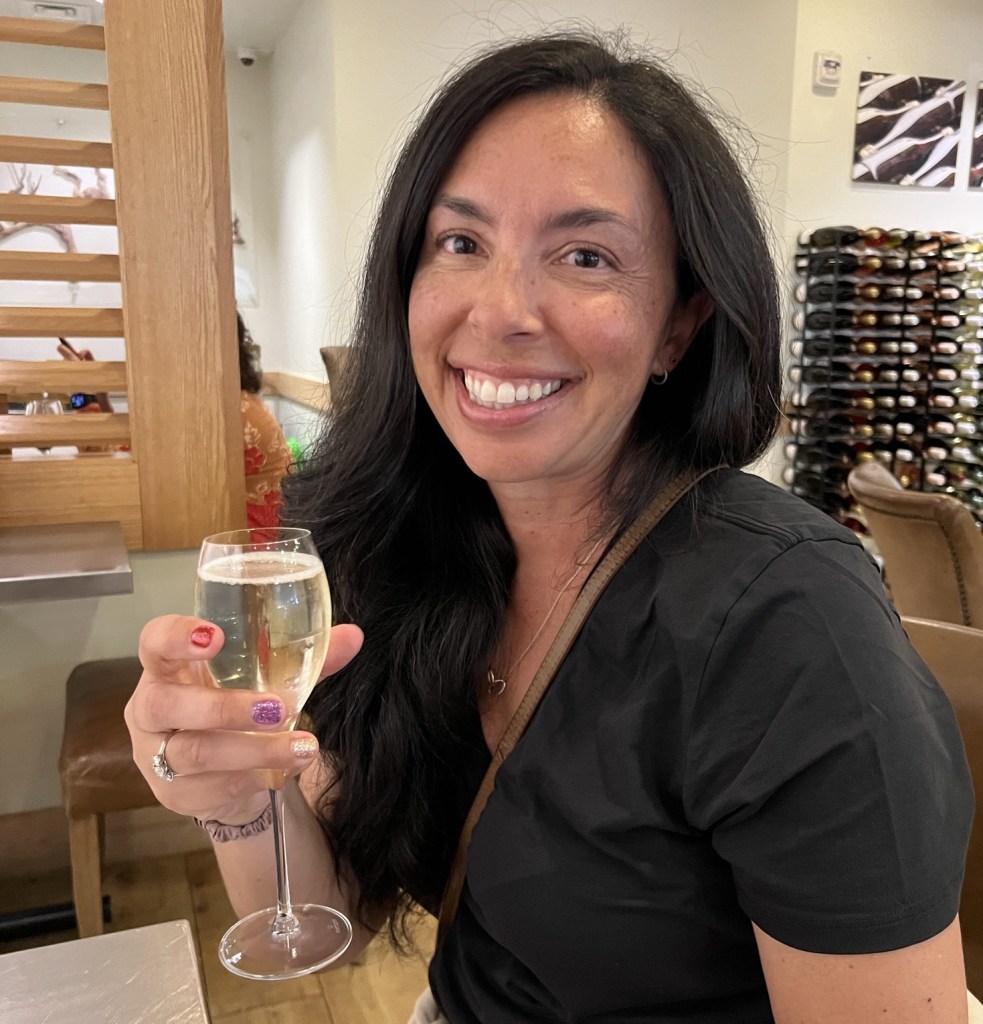
    Hi! I’m Jessica. I created this place to share my story.

    I’m a researcher and when I couldn’t find much about the topic of preventative (prophylactic) mastectomy with reconstruction from women who have a strong family history of breast cancer, I decided to put my journey into the world.

    I do not have the BRCA gene, but because of my family history, dense breast tissue and age, my risk score has increased to a stage of needing to take action.

    My intention is to share many of the stages of my journey to give you My Breast Perspective.

    Thank you for joining me.